
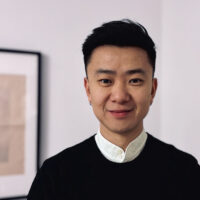
Prof. Richard Gao
W1 Professor, Machine Learning of World Models
Faculty of Computer Science and Mathematics
Center for Cognition and Computation
Robert-Mayer-Straße 11-15, Room 103
Goethe University Frankfurt
Email: r.gao@em.uni-frankfurt.de
Scientific Focus
Methods
Selected Publications
Gao, R., Deistler, M., Schulz, A., Gonçalves, P. J., & Macke, J. H. (2024). Deep inverse modeling reveals dynamic-dependent invariances in neural circuit mechanisms. bioRxiv.
Zeraati, R., Levina, A., Macke, J. H., & Gao, R. (2024). Neural timescales from a computational perspective. arXiv (to appear in Nature Neuroscience)
Vetter, J., Macke, J. H.*, & Gao, R.* (2024). Generating realistic neurophysiological time series with denoising diffusion probabilistic models. Patterns.
Gao, R.*, Deistler, M.*, & Macke, J. H. (2023). Generalized Bayesian inference for scientific simulators via amortized cost estimation. NeurIPS.
Gao, R., van den Brink, R. L., Pfeffer, T., & Voytek, B. (2020). Neuronal timescales are functionally dynamic and shaped by cortical microarchitecture. eLife.